
Introduction to Module INB704-Corporate entrepreneurship
The procedure for creating new business ventures or concepts within an existing company or an organization is known as corporate entrepreneurship, also known as entrepreneurship. It involves using a company’s assets and structures to establish and launch new products, services, or procedures that can produce additional revenue streams or stimulate growth. Corporate entrepreneurship requires a willingness to experiment with new ideas and take risks, often in a planned and organized way that is distinct from conventional business operations (Morris et al., 2010). Employees at all levels of the organization, from entry-level workers to top management, can drive it, and it can take various shapes, such as new product development, partnership opportunities, and internal startups.
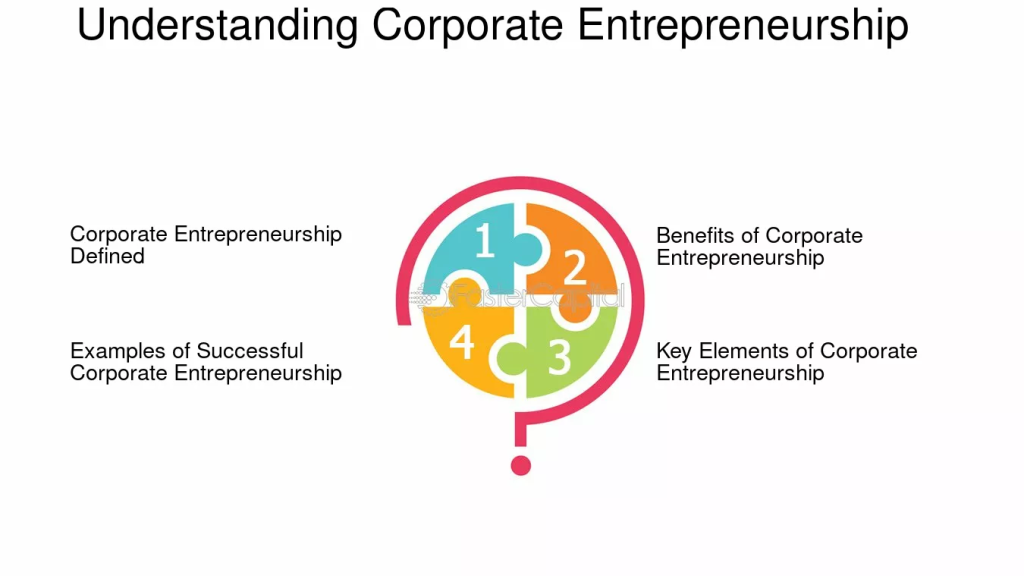
Moreover, corporate entrepreneurship can occur in numerous ways in the context of a businessIt may also involve forming partnerships with other businesses or acquiring startups in hopes of expanding the business’s performance (Kuratko, 2010).
Contact us now to get a complete 5000-word report for free
The frameworks used to evaluate the case are given below
Frameworks used in Corporate entrepreneurship
The frameworks used to evaluate the case are given below
- BOSI Quadrant of entrepreneurial DNA
- The Greiner Growth Model
- The sustaining framework Model
- The strategic integration framework
BOSI Quadrant of entrepreneurial DNA
Joe Abraham developed the BOSI Quadrant of entrepreneurial DNA to recognize different types of entrepreneurs based on their innate strengths and weaknesses. BOSI is an abbreviation for builder, opportunist, specialist, and innovator (Matthews et al., 2011).
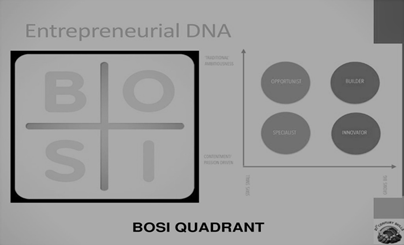
| Builders | Builders are those entrepreneurs who are inspired by a strong passion for building something from the ground up. Such entrepreneurs have a vision and the capacity to carry it out, and ready to take calculated risks ( Abell 2014). |
| Opportunist | Opportunists are those entrepreneurs who are competent at observing and taking advantage of opportunities. Such entrepreneurs are versatile and adaptable and are always looking for new ways to earn profit. |
| Specialists | Specialists are those entrepreneurs who are specialists in a specific field, such as innovation or marketing. Such entrepreneurs have comprehensive knowledge and expertise in their field and can resolve complicated issues. |
| Innovators | Innovators are those entrepreneurs who are creative people who are continuously growing new ideas and innovations (Artz et al., 2010). |
The Greiner Growth Model
André Greiner, a Canadian management consultant and academic, developed the Grenier Growth Model in 1972 (Zhang, 2010). This framework shows the different phases a company experience throughout its journey.
Entrepreneurial: This stage is differentiated by a small, informal organization that places great value on the entrepreneur’s vision and passion. At this stage, the organization is typically trying to create a market presence and generate revenue (Teece, 2010).
Collectivity: This stage is often differentiated by a change in focus from the entrepreneur’s vision to the mission and objectives of the company.
Formalization: At this point, the company has become even more structured and formalized, with strictly delineated policies and procedures of entrepreneur.
Elaboration: The objective is to maximize growth and profitability of the company while balancing the requirements of different stakeholders (Buhalis et al., 2020).
The sustaining framework Model
In 2004, American management academics Donald Kuratko, Jeffrey Hornsby, and Michael Goldsby developed the Sustaining Framework (Kuratko, 2016). The framework is aimed at helping managers in establishing and maintaining competitive advantage.
Opportunity: A market research conducted by company managers to evaluate customer needs and preferences, and creating an effective value proposition that solves a particular market need or problem of the company (Aarikka and Jaakkola, 2012).
Resources: Resources include not only monetary resources, but also human capital, intellectual property, and other key resources needed for the company’s success.
Capabilities: Managersconstruct a team with the necessary skills and expertise, establishing efficient procedures and structures, and developing a strong organizational culture that promotes development of the company.
Performance: Setting specific objectives and goals, tracking performance, and adapting strategies and tactics as necessary to guarantee that the company accomplishes sustainable growth (Seibert et al., 2016).
The strategic integration framework
In 2009, American management academics R. Duane Ireland, Michael A. Hitt, and Robert E. Hoskisson established the Strategic Integration Framework (Hitt et al., 2016). This framework is designed to assist organizations and managers in managing the complexities of strategy implementation.
External analysis: External analysis involves evaluating the impact of regulatory and economic factors on the company, as well as evaluating the market environment and identifying market trends and opportunities (Roger, 2010).
Internal analysis: Internal analysis involves analyzing the organization’s strengths and weaknesses, recognizing core strengths, and assessing the integration of the organization’s resources with its strategic objectives.
Strategy formulation: Setting strategic objectives, highlighting critical initiatives and projects, and creating an approach for implementation are all part of strategy formulation in a company.
Strategy implementation: Strategy implementation entails establishing performance metrics, establishing a transparency culture, and ensuring that the company has the assets and capacity to successfully execute the strategy in a firm (Thomas et al., 2013).
Company’s Overview
Real estate ltd Company specializing in the development of affordable housing developments. Real estate ltd Company is known for its dedication to creativity and stability, and its projects implement cutting-edge layout, energy-saving features, and cutting-edge accommodations. The company has a reputation for finishing work on time and within budget, and it has received several honors for its initiatives. Real estate ltd Company is well-represented in several major Indian cities, including Gurgaon and Sohna. Several large-scale housing projects, including affordable apartments, luxury villas, and commercial structures, have been finished by the company.
To be continued……..
Contact us now to get a complete 5000-word report for free
